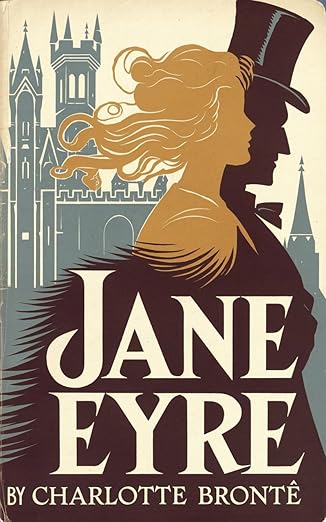
I am not going to lie, it has been very long since I last read Jane Eyre. When I first opened the book, I wasn’t sure how much I would connect with a novel written nearly two centuries ago.
Brontë’s Writing Style and Characters
Charlotte Brontë’s storytelling quickly drew me in. The writing style is rich and layered, at times it could be considered dense by modern standards. That being said, it has a haunting rhythm that fits the Gothic tone. Once you adapt to the cadence, you realize how intentional every word is, pulling you into a world of candlelit corridors, storm-swept moors, and a heroine’s turbulent inner life.
Jane herself is what makes this book timeless. She isn’t the “perfect” heroine—she’s plain, outspoken, and determined to claim her own worth in a society that constantly tries to silence her. Watching her grow from a mistreated orphan into a woman who demands love and respect on her own terms feels both radical for its time and empowering even now. Mr. Rochester, too, is layered. He is a brooding, flawed, and enigmatic man. I found the character to be one that forced me to wrestle with questions of morality, passion, and forgiveness.
Timeless Themes
What surprised me most is how modern the themes feel. Jane Eyre is, at its heart, about autonomy: a woman’s right to make choices about her life, her body, and her future. It’s about demanding equality in love, even when the world says you shouldn’t. These struggles resonate more today than I thought possible. I believe this is why the novel continues to captivate new generations of readers.
The novel also wrestles with morality, faith, and the complexity of human relationships. It asks us to consider where we draw the line between passion and principle, and what sacrifices are worth making for the sake of integrity. Jane’s refusal to compromise her values, even when it means turning away from what she most desires, feels both heartbreaking and inspiring. These questions don’t belong only to the Victorian era; they’re challenges we continue to face in different forms today.
Final Thoughts
If you’ve been hesitant about reading the classics, Jane Eyre is a perfect place to start. It blends romance, suspense, and social commentary in a way that feels like a page-turner, even now. Brontë gives us a story that is both Gothic and fiercely human—a reminder that the search for love, freedom, and identity is a story we never stop telling.
For me, what makes Jane Eyre unforgettable is how personal it feels despite its age. It’s more than a love story or a Gothic novel; it’s a declaration of selfhood. Brontë created a heroine who insists on being seen and valued, and that insistence still echoes powerfully today.
What do you think? Have you read Jane Eyre?
 Hazel Harbor Books
Leave a comment